
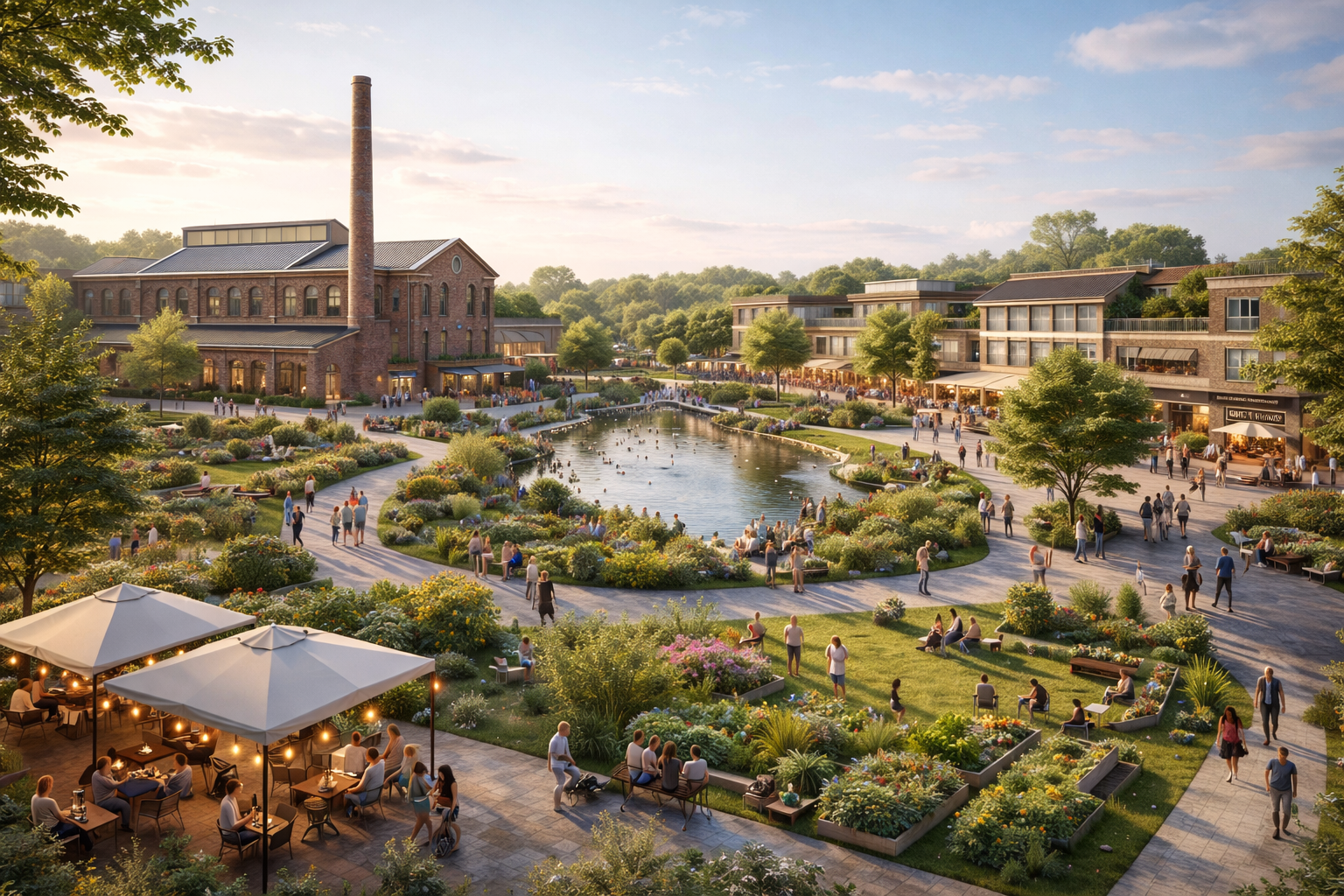
Complex urban development and regeneration projects require more than individual development initiatives. They require coordination across land, infrastructure, capital, and delivery strategy, and they must be shaped in partnership with the communities they affect.
ORA approaches regeneration as a system, not a single project.
Our role is often to act as a systems integrator, helping landowners, communities, governments, investors, and delivery partners align the key components required for projects to move from vision to implementation.
Successful regeneration typically depends on the alignment of five core elements.
Land
Planning frameworks, land assembly, and precinct-scale development opportunities establish the foundation for regeneration. Working alongside landowners, iwi, and communities, coordinated land strategies help move projects beyond fragmented site-by-site development.
Infrastructure
Infrastructure capacity, servicing strategies, and delivery models shape the viability of regeneration projects. Early collaboration with infrastructure providers, councils, and communities helps ensure infrastructure investment supports long-term place outcomes.
Capital
Regeneration projects often require funding and financing models that align infrastructure investment with long-term development outcomes. ORA supports the structuring of capital frameworks that enable regeneration to proceed with financial clarity while supporting durable community outcomes.
Delivery
Governance structures, master developer models, procurement approaches, and programme sequencing determine how projects are implemented over time.
Strong delivery frameworks help coordinate the efforts of landowners, governments, investors, and communities across multiple stages.
Place
Successful regeneration ultimately creates places where people can live, work, and connect. Urban design quality, public space, and mixed-use development help ensure regeneration strengthens community identity and long-term resilience.
Outcome
When land, infrastructure, capital, delivery frameworks, and place outcomes are aligned, regeneration becomes financially viable, institutionally credible, and grounded in the aspirations of the communities it serves.
While many engagements occur in New Zealand and Australia, the structural challenges regeneration seeks to address — infrastructure funding, capital alignment, and delivery coordination — are increasingly shared across cities globally.